Another animal facts article! How fun😊. I truly enjoy writing these articles and plan to write many more. The spotlight will be on the Echidna this time. I am not familiar with the community standards here so just to be safe I will mention that this article contains notes about the male and female reproductive anatomy of the Echidna. Although I have confidence my readers are mature enough to handle the content.
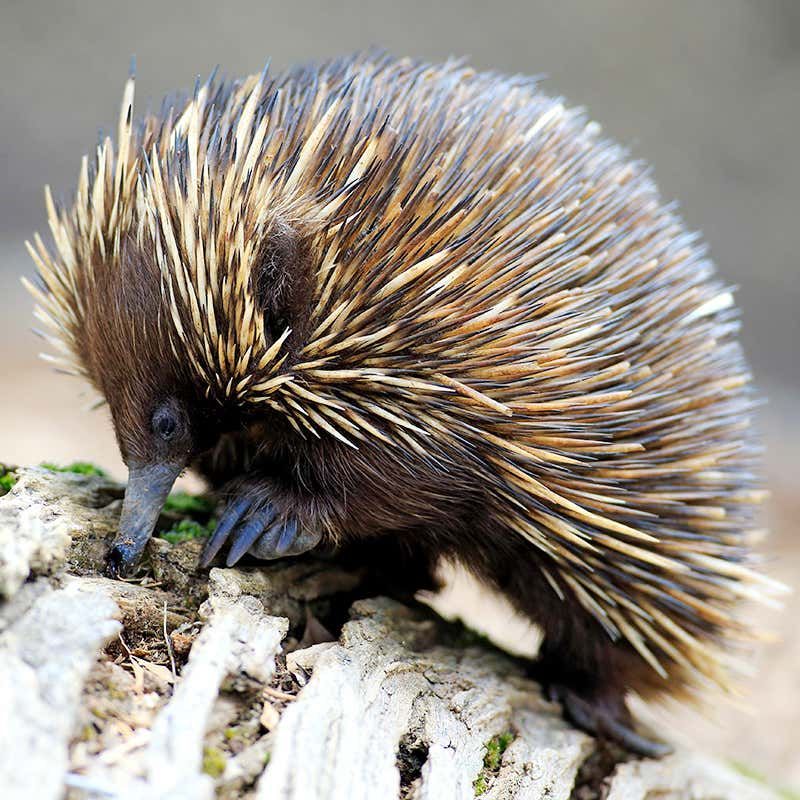
Echidnas, also known as spiny anteaters, are egg-laying mammals with spiky exteriors native to Australia, New Guinea, Tasmania, Indonesia, and Papua. The Echidna is usually found in open heathland, forests, woodlands, shrublands and grasslands. They also enjoy scavenging among low vegetation or in hollow logs. The only other egg laying mammal that is also a marsupial in the world would be the platypus. The name “echidna” comes from the Greek word ékhidna, which means “viper”. It also refers to a mythological monster that was half-woman and half-snake.
Unlike the porcupine, they cannot shoot quills. Instead they have razor sharp spines made of keratin. When under attack they can curl into a ball and burrow underground to protect themselves. Echidnas do not have teeth but pads to grind their food, similar to those of the cattle, llama and alpacas. Just like anteaters, they have long sticky tongues to eat larvae, beetles, termites and ants, among other insects. The snout is narrow and the mouth very small. Echidnas are stocky and virtually tailless except for a little bald snub hidden underneath.
They have strong-clawed feet and spines on the upper part of the brownish body. These animals have the lowest internal body temperature of all mammals. Despite having no external ears, echidnas’ hearing is well above average. They also have electro sensors in their noses and have been known to blow snot bubbles to clear debris from their nostrils. It is speculated that the electro sensors on their snout helps locate bugs deep underground and within tree trunks. Their sense of smell is exceptionally accurate.
Echidnas are powerful diggers, with hind feet that point backwards to help expel dirt away. Local people say the animal can dig holes as fast as a human using a shovel. They are often found digging massive burrows in search of their food. They are also excellent swimmers and tree climbers. It is not unusual to see them high in the trees in search of tree dwelling insects. However, they are slow moving on the ground and can be an easy target. The echidna’s face many predators including foxes, dingoes, goannas, eagles, snakes and tasmanian devils.

Perhaps what is the most bizarre thing about the echidna is that the male has a four headed penis, which are actually rosette-like glans at the end. Only two of these four glans ever become functional during erection. Which glands are functional seems to alternate between subsequent erections.The male appendages are bright red and retract into the body when not in use, and emerge through the cloaca when erect. Echidna penises are used only for sexual reproduction, unlike most other mammals.
The cloaca is a multipurpose opening for urinating, defecating, and, in females, egg laying. Both males and females have a cloaca. For the males, their testes never descend. Their anatomy does not consist of a scrotum. When not in use, their penises are stored internally and their ejaculate contains bundles of up to 100 sperm that swim cooperatively until they reach the egg. Yep, you read that right, they work together!
From mid-May to early September, male echidnas actively seek out females to mate.They form a line known as an ‘echidna train’, with the female leading the ‘train’, followed by up to ten males. A smaller, younger male is often at the rear of the line.The male suitors follow the female for long distances until the female is ready to mate. She then lies relaxed and flat on her stomach and the males that formed the ‘train’ dig a circular trench around her. Eventually the largest male pushes the competing rivals out of this ‘mating rut’.
He then digs more dirt out from the spot where the female’s tail is resting, lies on his side and places his tail under hers, and they mate.
The female lays a single soft-shelled, leathery egg 22 days after mating, and deposits it directly into her pouch. At this time it is about the size of a grape. The pouch is a temporary structure and will soon disappear after the baby leaves, usually around twelve months.
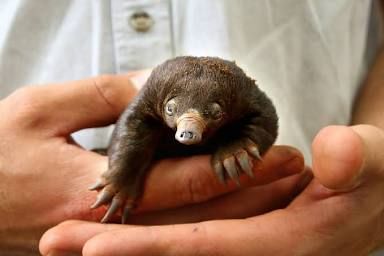
Baby echidnas are called puggles and are hairless and blind when hatched. They use a sharp tooth to break the egg similar to the chicken. Puggles drink pink milk from patches on their mum’s abdomen inside the pouch. The females do not have nipples so they release high iron milk into these patches for the puggles to lap up.
Echidna moms leave their babies in the burrow while they forage for food, returning every few days to feed them.
At about a year old it is weaned and begins to live life alone. Echidnas are solitary creatures unless they are with young or in search of a mate.


There you have it folks, the fascinating life of an echidna. If you enjoy this content please hit the like and subscribe buttons for my latest posting. I plan to do more of these in the future as the urge comes along. As always thank you for reading and God bless.
Sources:
https://www.zooborns.com/zooborns/echidna/
https://pursuit.unimelb.edu.au/articles/solving-the-mystery-of-the-four-headed-echidna-penis
https://www.google.com/search?q=echidna+life+stages+&client
https://en.m.wikipedia.org/wiki/Echidna
https://www.environment.sa.gov.au/goodliving/posts/2019/01/echidna-facts
Discover more from HC Content
Subscribe to get the latest posts sent to your email.

An open heart for all beings is a never ending blessing, In—joyed the reading, thank you 🙏 🤗
LikeLiked by 1 person
You are very welcome
LikeLiked by 1 person
Heather, yes, this creature is fascinating! Thanks!
LikeLiked by 2 people
You are welcome!
LikeLiked by 1 person