Welcome again to another post about animals! I truly enjoy writing these and usually learn something new. As always thank you for reading and God bless. If you enjoy reading my article, leave a comment and let me know. I love hearing from my readers.

The Vulture Bee
Vulture bees, also known as carrion bees, are a small group of stingless South American bees that eat rotting meat .By breaking down organic matter and recycling nutrients, these decomposers sustain ecosystems, plant succession, and habitat regeneration.
Their gut prefers carrion over pollen as a protein source. Compared to vegetarian bees, these carrion-lovers had dramatically different microbiomes, according to a study published this month in the microbiology journal mBio. The guts of vegetarian stingless bees, honeybees and bumblebees all contained the same five microbes. However, vulture bee stomachs were riddled with specialized acid-loving bacteria that allow them to digest meat without getting sick from toxins that form on rotting flesh.
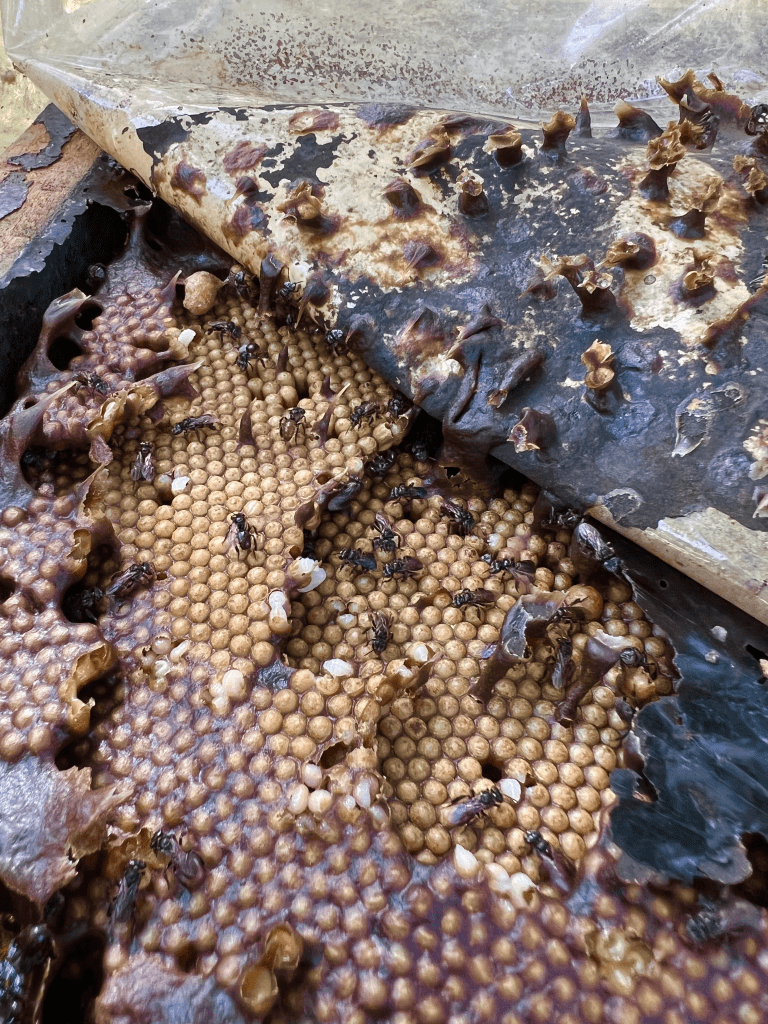

These bees do not collect pollen from flowers like most of their relatives. Instead, they ingest the flesh of dead birds, monkeys, lizards, snakes, and fish. Vulture bees have large, pointed teeth, which they use to break into a carcass through its eyes, just like maggots do. They slice off pieces of meat from the carcass and store them in their crops. Back at their nests, bees regurgitate the meat and mix it with honey. In about two weeks, the mixture turns into a paste rich with free amino acids, proteins and sugars. This nutritious pap is then fed to bee larvae.
The flavor of the honey produced is described as a mix of spam and beef jerky, which is not appealing to most human palates. Others describe the thick substance as having,ba unique, potentially smoky, intense, salty, or uniquely sweet flavor, unlike the notes of floral in other honey.
https://www.smithsonianmag.com/smart-news/vulture-bees-have-specialized-microbiomes-that-aid-their-taste-in-meat-180979131/
https://scottishpollinators.wordpress.com/tag/vulture-bees/
The Atlantic Torpedo Wray

Atlantic torpedo rays can reach up to 6 feet long and weigh 200 pounds. They are found in various locations worldwide, including the Atlantic and Pacific Oceans, as well as the Mediterranean Sea, inhabiting shallow to moderately deep waters. Members of this species are usually found on sandy bottoms around rocky reefs and kelp beds. These rays are solitary, nomadic, and can remain suspended in the water with minimal swimming effort.


Electric rays have two kidney-shaped organs on the sides of their head that generate and store electricity, similar to a battery. These organs are composed of modified muscle cells arranged in a honeycomb pattern. Electric rays use their electric shocks for various purposes, including stunning prey, defense, and possibly sensory location. They can produce electric shocks ranging from 8 to 220 volts, depending on the species. These jolts are used to stun prey and for defense. Electric torpedo rays ambush predators and hunt by lying on the seabed. They then engulf and swallow their stunned prey.
In ancient Greece and Rome, the electric shocks of certain species, like the Atlantic torpedo ray, were used in medicine to treat conditions like gout and headaches. Due to the numbing effect of their electric shock, ancient Romans and Greeks called these rays “numbfish”.
https://www.sharktrust.org/blog/creature-feature-electric-rays#:~:text=The%20electric%20rays%20(Torpediniformes)%20are,shock%20used%20to%20incapacitate%20prey.
https://seaworld.org/animals/facts/cartilaginous-fish/electric-rays/
https://seaworld.org/animals/facts/cartilaginous-fish/electric-rays/
The Stone Fish

Stonefish are found in the coastal regions of the Indo-Pacific oceans, ranging from Africa and the Red Sea to Japan and Australia. They are incredibly well-camouflaged, blending seamlessly with their rocky and coral reef surroundings. They often rest on the seabed, appearing as rocks or coral, making them difficult to spot. Their skin is rough and covered with wart-like bumps and fleshy flaps, further enhancing their ability to blend into their surroundings.
Unlike most fish, stonefish can survive for up to 24 hours out of water, which is an uncommon trait in the deep-sea animal kingdom.
These weird creators are generally solitary except during mating season, when they aggregate to lay eggs. The female will lay her gelatinous egg mass while swimming across the seafloor. Males will then follow, releasing their sperm as they swim over the newly laid eggs.


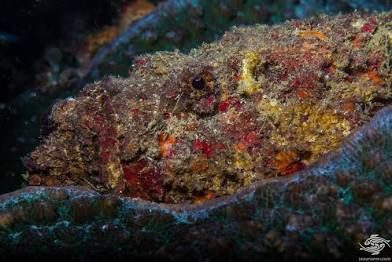
Stonefish are ambush predators, lying in wait for unsuspecting prey like small fish and crustaceans. They have a large, upturned mouth that they use to suck their prey in.
Stonefish also possess 13 venomous spines on their dorsal fins connected to two venom sacs. These spines can be erected when threatened. When activated, light blue spines protrude from the skin. They then release a blue hued toxin, yet another unique trait as blue is not common in nature.
The venom causes immediate and severe pain that can last for days, along with swelling, tissue necrosis, and potentially paralysis, shock, and even death.
The Most Venomous Fish in the World: Top 5 Stonefish Facts

The Werewolf Mouse
The “werewolf mouse,” also known as the grasshopper mouse, is a carnivorous rodent that howls to defend its territory and communicate with others.
They emit high-pitched, wolf-like howls, which they use to defend their territory. They are highly territorial and will aggressively defend their home, using both vocalizations and physical confrontations.
These rodents are native to North and South American deserts. They are stocky, with a reddish-tan or gray coat, and have short tails. This species are relatively small, with an average body length of 164 mm (6.5 in) and a weight of around 35 g (0.077 lb). The average lifespan of a grasshopper mouse is 2 years.


Grasshopper mice are carnivorous, meaning they primarily eat meat, unlike most other mice that are omnivores.
They are known to stalk and ambush their prey, including insects, worms, spiders, centipedes, scorpions, snakes, and even other mice. On top of these unique qualities, the mouse is also immune to various venoms used by some of the creatures it hunts and usually comes out at night.
https://www.google.com/amp/s/fox4kc.com/news/kansas-news/rare-werewolf-mouse-found-in-kansas-with-other-elusive-species/amp/
https://sites.psu.edu/siowfa15/2015/12/03/werewolf-mice/

The Fossa
The fossa is Madagascar’s largest carnivore. It is a unique predator, related to mongooses, with a cat-like appearance. Well known for its exceptional climbing and hunting abilities, both in trees and on the ground. They are the only predator on Madagascar capable of preying on adult lemurs, even the largest ones. Lemurs makie up a significant portion of their diet, but they also eat rodents, birds, reptiles, and invertebrates.


Their coat is short, reddish-brown, and they have a mongoose-like head with a broad, short muzzle and large, rounded ears. Fossas have slender bodies, muscular limbs, and a tail nearly as long as their body, helping them balance and jump between trees.
They can reach nearly six feet in length, with half of that due to their long tails. They weigh 15 to 30 pounds with males larger.
Fossas have a unique mating system where females occupy a tree, and males congregate below, fighting and calling to attract her. Females mate with multiple males during their seven-day estrus period. Gestation lasts approximately three months, and females typically give birth to two to four pups. Fossa live to around 15 years in the wild and up to 20 years in captivity.
https://www.zsea.org/reserve/animals/fossa
https://en.m.wikipedia.org/wiki/Fossa_(animal)
Discover more from HC Content
Subscribe to get the latest posts sent to your email.

It’s a wacky and wonderful World of Nature we live in, …so many diverse species, … and without them the fabric of Life would fall apart, …thank you sharing, … 💫🙏💫🌼💫
LikeLiked by 2 people
Thank you for your comment 😊
LikeLiked by 2 people