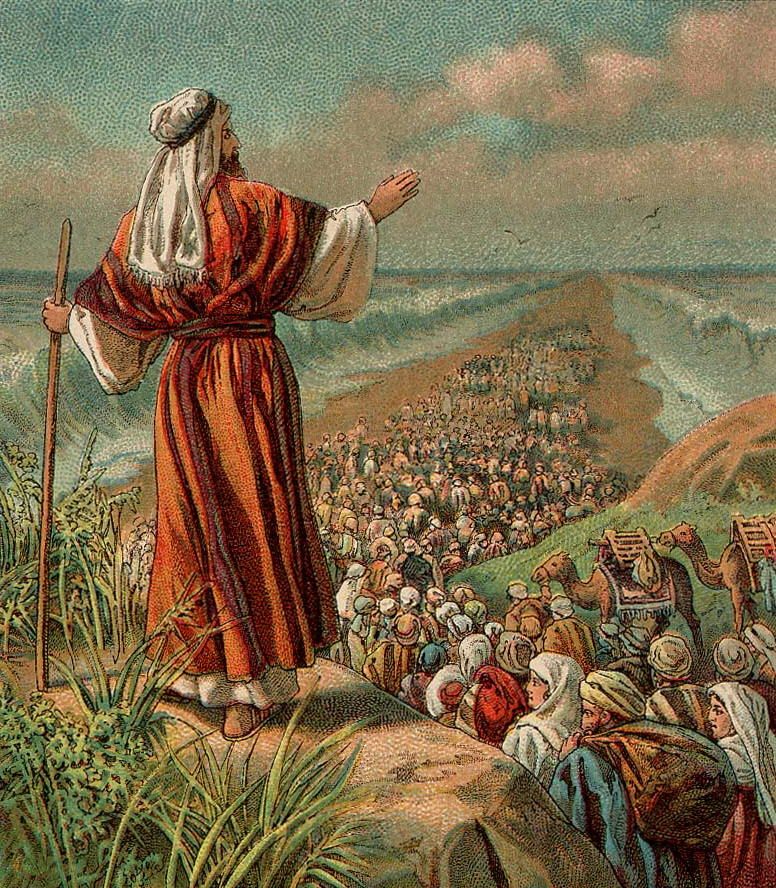
Moses is one of the most pivotal figures in the Bible, known for his remarkable leadership and role as a prophet, lawgiver, and mediator between God and the Israelites. Born to Amram and Jochebed, Hebrew slaves in Egypt, Moses’ early life was marked by a miraculous event. To save him from Pharaoh’s edict to kill all Hebrew male infants, his mother placed him in a basket, where he was discovered and adopted by Pharaoh’s daughter. Raised as an Egyptian prince, Moses received a comprehensive education in various fields, including geometry, science, and mathematics.
As he grew older, Moses became aware of his Hebrew heritage and the suffering of his people. After killing an Egyptian who was beating a Hebrew slave, Moses fled to Midian, where he encountered God in a burning bush. This encounter marked the beginning of Moses’ journey as a leader, as God commissioned him to lead the Israelites out of Egyptian bondage. With the help of his brother Aaron, Moses confronted Pharaoh, demanding the Israelites’ release. When Pharaoh refused, God sent ten plagues upon Egypt, culminating in the Passover, where the Israelites were instructed to mark their doorposts with the blood of a lamb to spare their firstborn sons.
The parting of the Red Sea was another pivotal moment in Moses’ life, demonstrating God’s power and Moses’ faithfulness. As the Israelites wandered in the wilderness, Moses acted as an intermediary between God and the people, receiving divine instructions and conveying them to the Israelites. On Mount Sinai, God gave Moses the Ten Commandments, a foundational moral and legal code that would shape the Israelites’ relationship with God and with each other.
Throughout his life, Moses demonstrated humility, faithfulness, and obedience to God. Despite initial doubts about his ability to lead, Moses trusted God and fulfilled his role as a mediator, speaking with God “face to face.” His leadership was marked by his willingness to serve and guide the Israelites, even in the face of challenges and rebellion.
Moses’ legacy extends far beyond his lifetime. In Judaism, he is considered the greatest prophet, and his teachings are foundational to Jewish law and tradition. In Christianity, Moses is seen as a precursor to Jesus Christ, symbolizing the law that Jesus would later fulfill. In Islam, Moses (Musa) is also considered a prophet and a model of faithfulness and obedience to God. Through his remarkable story, Moses continues to inspire and guide people of faith around the world.
Discover more from HC Content
Subscribe to get the latest posts sent to your email.

Have you seen this video?
There’s an account on Instagram called holyvlogsz where someone makes AI videos on biblical stories where the main person is a vlogger, some of them are so good!
LikeLiked by 2 people
I have seen some of these! They can be quite entertaining.
LikeLiked by 1 person